Program
Montessori Program
Child-led discovery in a beautifully prepared learning environment.
Overview
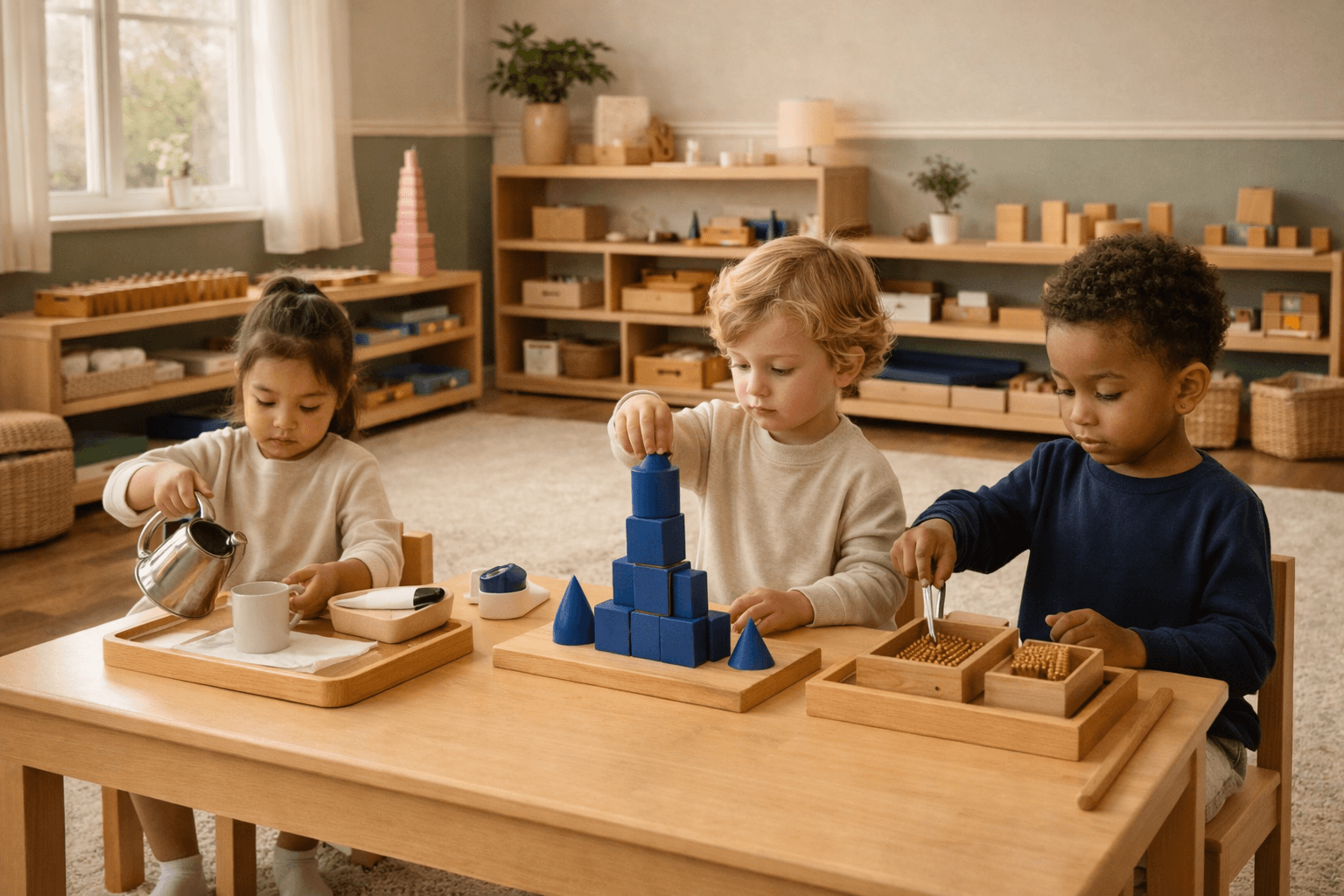
Our Montessori environment nurtures concentration, independence, grace, and curiosity through self-paced, hands-on learning.
Children engage with thoughtfully prepared materials across practical life, language, sensorial work, early mathematics, and cultural exploration.
Benefits
Features
FAQ
How is Montessori different from a traditional preschool?
Montessori emphasizes self-directed learning, hands-on materials, mixed readiness levels, and guided independence instead of one-size-fits-all instruction.
Is this suitable for first-time school goers?
Yes. The environment is designed to help children settle gently, develop routine, and grow in confidence.
What Is Montessori?
A way of learning that respects how children naturally grow
Montessori is not just a teaching style. It is a child-centred philosophy that believes children learn best when they are given freedom within structure, meaningful materials, and calm guidance.
In a Montessori environment, children are encouraged to explore, repeat, observe, concentrate, and discover concepts through hands-on experiences. This helps learning feel joyful, natural, and deeply rooted.
Rather than rushing children through rigid instruction, Montessori supports the development of independence, confidence, coordination, communication, and responsibility in a way that feels respectful and age-appropriate.
Why It Matters
A foundation that supports both school readiness and life readiness
A Prepared Environment
Beauty, order, and calm are part of the learning process
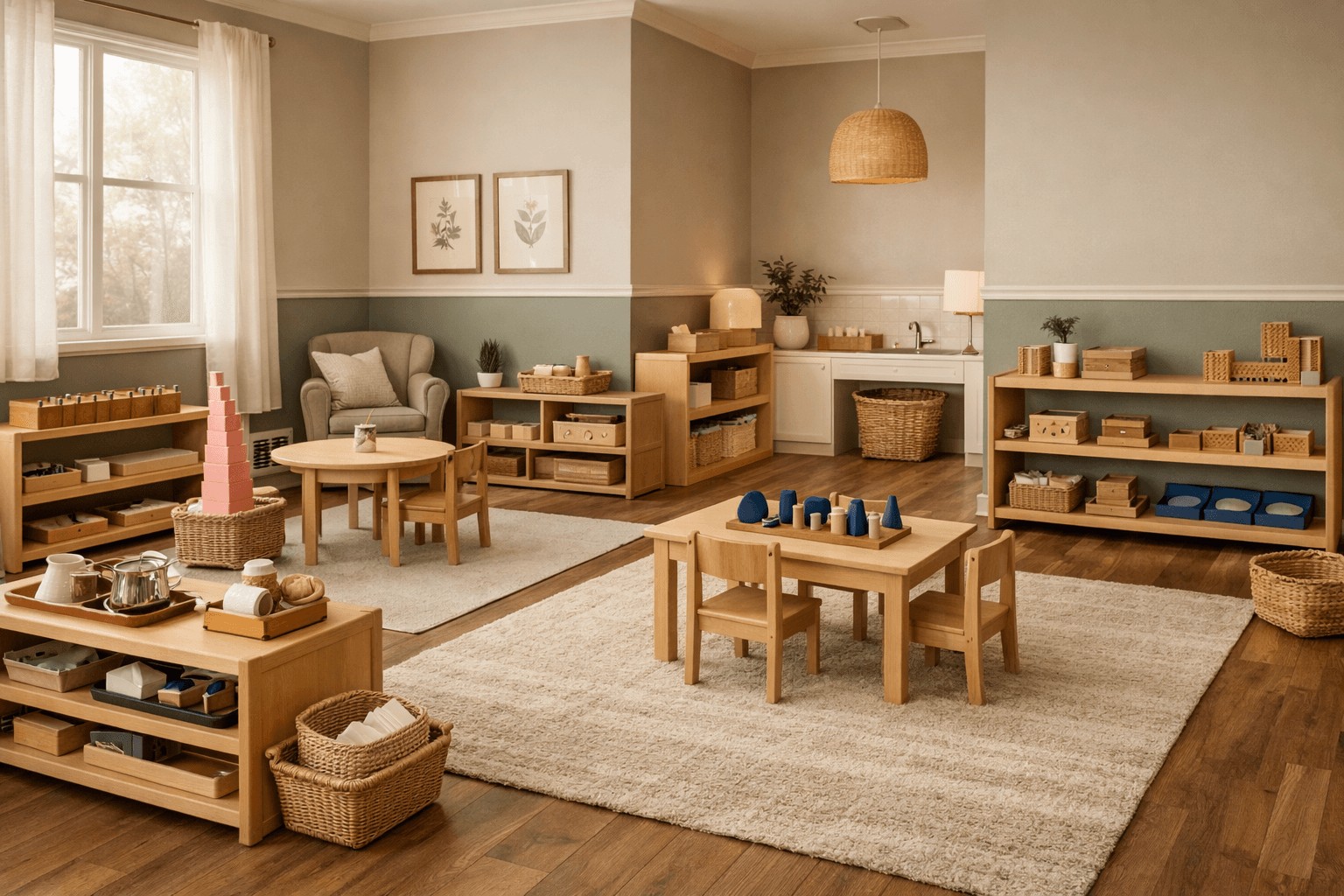
A Montessori classroom is intentionally designed to feel inviting, orderly, and child-accessible. Materials are placed thoughtfully, movement has purpose, and the environment itself teaches independence.
When children feel calm and capable in their environment, learning becomes deeper, more self-motivated, and more joyful.
Core Montessori Pillars
What children experience in a true Montessori environment
Independence
Children learn to do simple tasks for themselves, make choices, and build genuine confidence through everyday success.
Hands-on learning
Materials are designed to be touched, explored, repeated, and understood through experience rather than passive instruction.
Concentration
Montessori encourages deep focus by allowing children to engage meaningfully with work at their own pace.
Respectful guidance
Educators observe, guide, and support instead of constantly directing, allowing each child's natural rhythm to unfold.
Why Families Choose Montessori
Because it nurtures more than academics
Families often choose Montessori because they want their child to grow in confidence, independence, and emotional security, not just memorize early concepts.
Montessori gives children the space to become active participants in their own learning. They begin to trust their abilities, enjoy purposeful routines, and feel proud of what they can do for themselves.
For parents, this often means seeing children become calmer, more expressive, more coordinated, and more willing to engage with the world around them.
How Montessori Is Different
Child-led, not one-size-fits-all
Instead of every child doing the same thing at the same time, Montessori allows guided choice and personalized learning readiness.
Materials with purpose
Each Montessori material isolates a concept clearly, helping children understand through repetition, movement, and discovery.
Learning through doing
Children absorb more deeply when they pour, sort, build, trace, count, match, and explore with their hands.
Grace, order, and responsibility
The environment teaches children to care for themselves, respect others, and participate meaningfully in the classroom community.
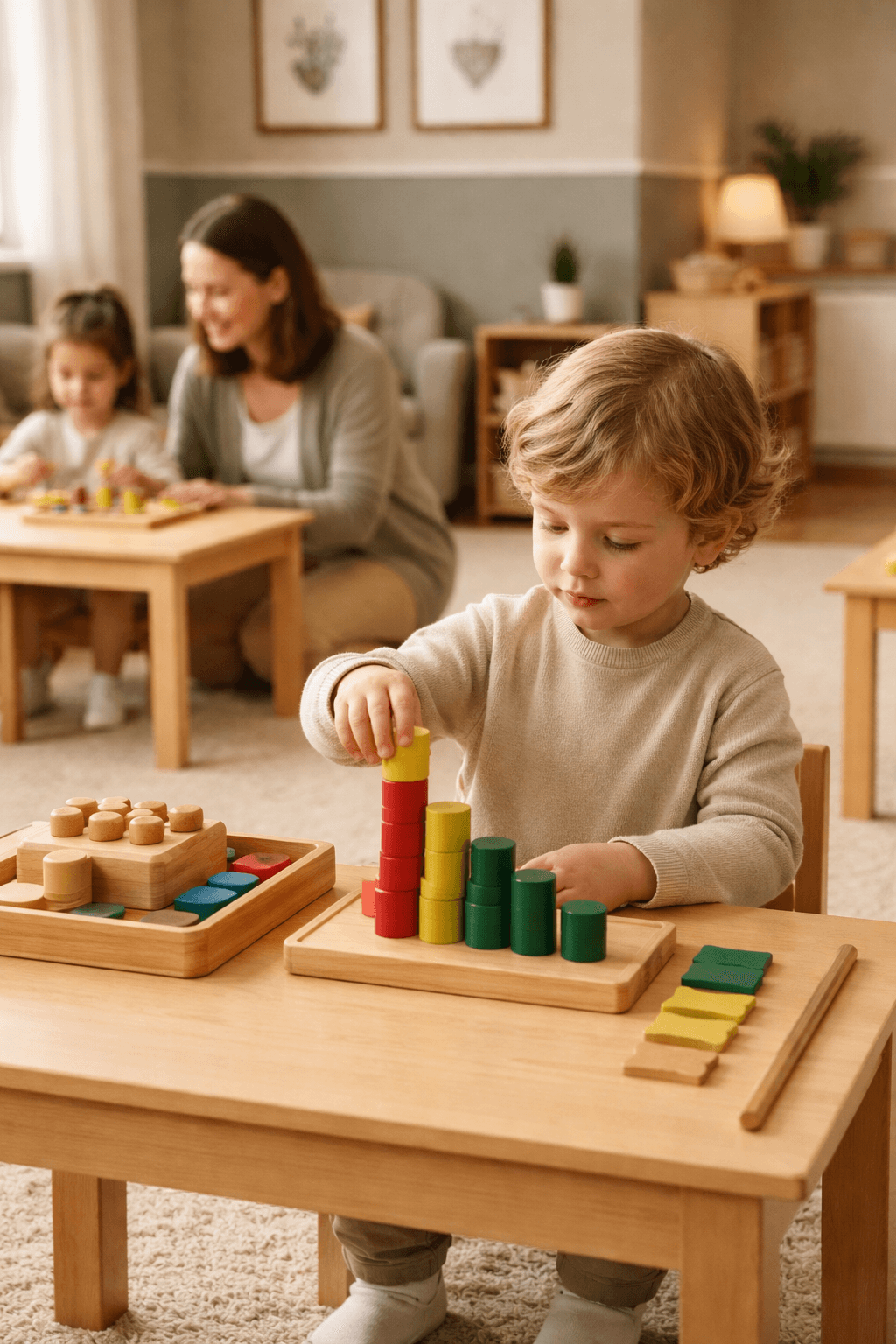
Learning In Action
Montessori helps children move from curiosity to concentration through purposeful activity, repetition, and joyful discovery.
What Parents Often Notice
Children begin to show confidence in quiet but meaningful ways
Parents often notice that Montessori children become more independent in daily routines, more willing to try things on their own, and more comfortable expressing their needs.
Over time, they also begin to show stronger concentration, more careful movement, better listening, and greater pride in completing tasks for themselves.
These are the kinds of foundations that support not just early schooling, but self-confidence and responsibility over the long term.
See Montessori in Action
The best way to understand Montessori is to experience the environment in person
Visit Sharada Koota Montessori to see how the classroom feels, how materials are arranged, how children engage with work, and how calm, purposeful learning becomes part of the everyday rhythm.