Program
Kannada Kasturi
Language-rich cultural learning rooted in local identity.
Overview
Kannada Kasturi supports connection to language, story, rhythm, and culture through experiences that feel warm, familiar, and joyful.
It helps children become comfortable with expression and cultural awareness in an age-appropriate way.
Benefits
Features
FAQ
Do children need prior fluency in Kannada?
No. The program can support beginners as well as children with some familiarity.
Why Kannada Kasturi Matters
A language-rich program that helps children connect with culture, identity, and expression
Kannada Kasturi is designed to help children experience Kannada as something warm, musical, familiar, and joyful rather than formal or intimidating.
Through stories, rhymes, songs, vocabulary activities, and cultural moments, children begin building comfort with the language in ways that feel natural and engaging.
The program supports not only language familiarity, but also cultural rootedness, participation, and a stronger sense of connection to the place they live in.
Why Families Choose It
Why This Feels Special
Language becomes easier to love when it comes through rhythm, story, and culture
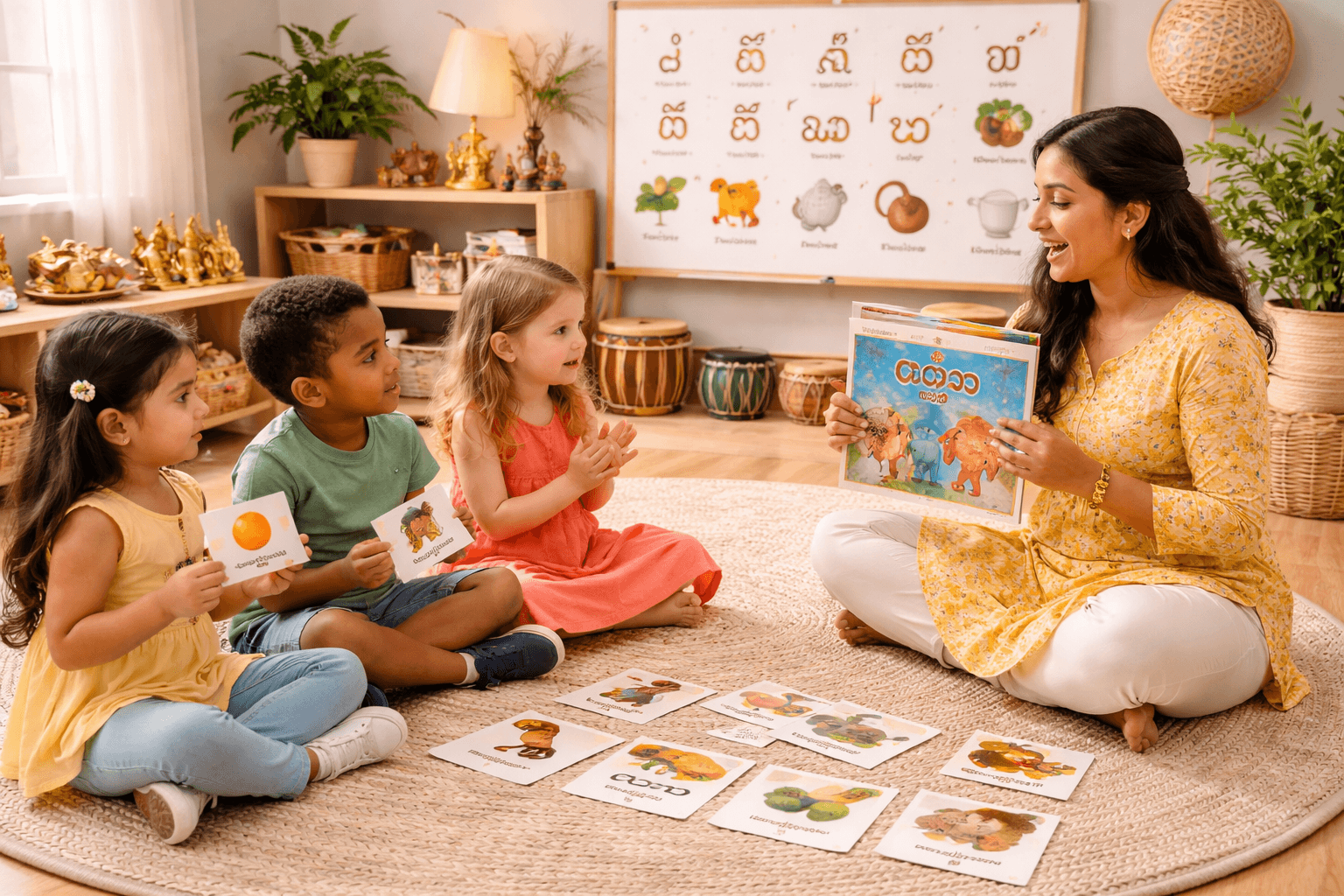
Children connect more naturally with language when it is presented in ways that feel expressive, playful, and familiar rather than formal and pressured.
Kannada Kasturi creates that kind of learning atmosphere by combining storytelling, song, repetition, and culture-rich participation.
The Kannada Kasturi Experience
Language learning that feels joyful, expressive, and culturally alive
Comfort with Kannada
Children begin to hear, recognize, and use Kannada naturally through repeated joyful exposure in stories, songs, and guided interaction.
Cultural rootedness
The program helps children connect with local traditions, rhythms, and language in a way that feels warm, meaningful, and age-appropriate.
Confident expression
Language games, storytelling, and participation help children speak, listen, and express themselves with greater ease.
What Makes It Special
More than language exposure - it builds belonging
Kannada Kasturi is special because it does not treat Kannada as a subject to be memorized. Instead, it presents the language through lived experiences that children can enjoy, repeat, and connect with emotionally.
This helps children become more open to the language, more willing to participate, and more comfortable with expression even if they are beginners.
It also creates a beautiful bridge between language, culture, rhythm, and identity - something many families value deeply.
Inside the Program
Storytelling and rhymes
Children hear and enjoy Kannada through stories, songs, rhythm, and repetition that support natural understanding.
Vocabulary through play
Games, pictures, themed activities, and conversation-based learning help language feel active and approachable.
Cultural activities
Festivals, traditions, songs, and local themes help children experience Kannada as a living culture, not only a subject.
Gentle participation
Children are encouraged to join in, repeat, respond, and speak at their own comfort level so confidence grows naturally.
Language In Practice
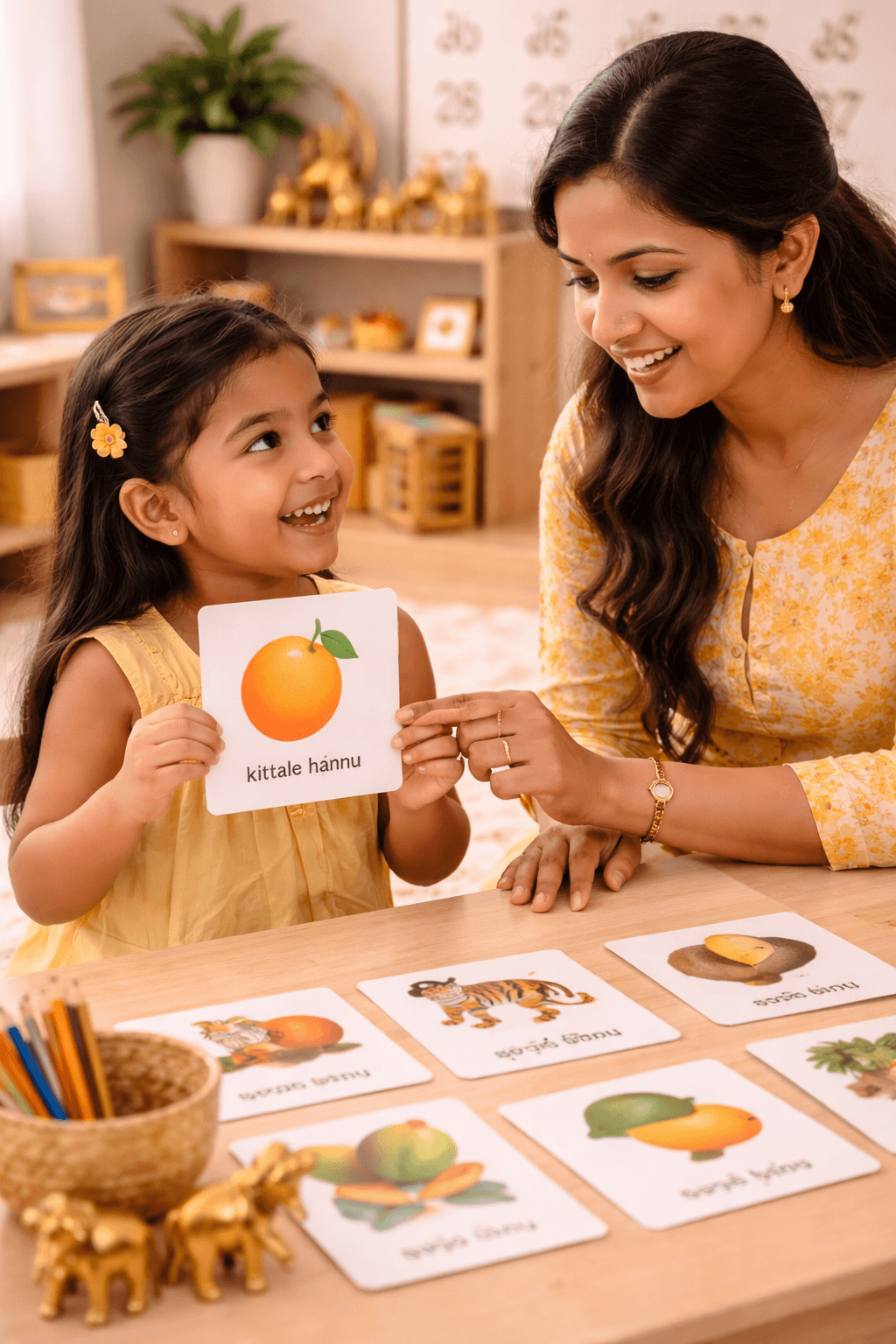
Through stories, songs, repetition, and interaction, children begin to feel more at ease with listening, responding, and expressing themselves in Kannada.
What Families Notice
Children become more open, expressive, and culturally connected
Families often notice that children become more curious about Kannada words, songs, stories, and local cultural references once they experience them in joyful ways.
They also begin to participate more naturally, respond with more confidence, and show a stronger sense of familiarity with the language over time.
This makes Kannada Kasturi feel not only educational, but deeply meaningful for identity and belonging too.
Celebrate Language and Culture
Choose a program that helps children feel more rooted, expressive, and connected
Speak with the school to understand the right age group, program fit, and how Kannada Kasturi can support your child's language confidence and cultural familiarity.